
Derived Data Gurugram Secondary Market: Investor Guide
The Informational Void in Resale Real Estate
Unlike developed global real estate destinations that rely on centralized Multiple Listing Services (MLS) to share clean transaction histories, the Gurugram secondary real estate market data ecosystem operates with a noticeable transparency deficit. Brokers often use fragmenting pricing models, asking prices are frequently inflated by emotion, and historic transaction archives can be difficult for external investors to access.
For institutional funds and private investors targeting the resale market, relying on advertised asking prices can lead to inaccurate asset valuations. Navigating this landscape successfully requires using derived data analytics—synthetic calculation models built by tracking public registry filings, monitoring developer construction updates, and analyzing corporate balance sheet shifts.
Defining Derived Data: Building Clarity Out of Market Fragmentation
Derived data is the practice of uncovering true asset value by blending multiple non-traditional data sources together, rather than relying on unverified broker listings. Because public asking prices often include speculative markups, sophisticated investors look at hard operational indicators instead:
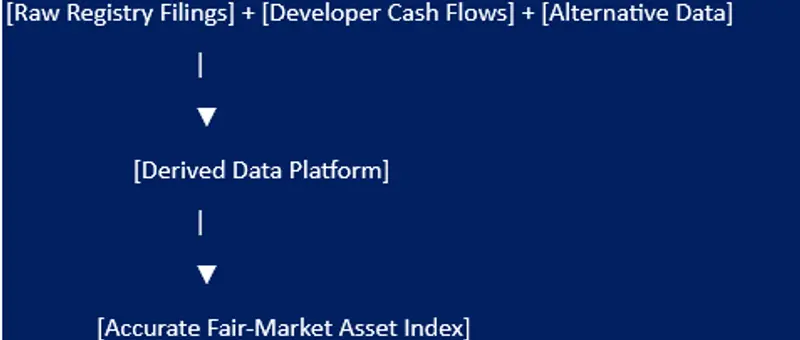
By cross-referencing official stamp duty registration logs with structural delivery timelines, analytical platforms can strip away artificial market noise. This methodology provides a reliable look at actual transaction prices, giving buyers the clear insights needed to execute large-scale portfolio acquisitions with confidence.
The Core Analytics: Turning Disjointed Information into Actionable Insights
Overcoming the market's transparency deficit requires building a robust, multi-tiered analytics pipeline designed to track real-time transactional movements.
A. Algorithmic Registry Auditing
By regularly pulling and structuring raw data from local sub-registrar filings, investors can track real transaction trends across individual condominium towers. This approach reveals the exact price points where buyers are finalizing deeds, bypassing unverified broker claims.
B. Tracking Alternative Utility Indicators
Monitoring operational indicators—such as active digital electricity meter connections, monthly maintenance collections, and localized occupancy shifts—helps investors measure real end-user demand. This data allows buyers to separate high-occupancy residential communities from highly speculative, empty developments.
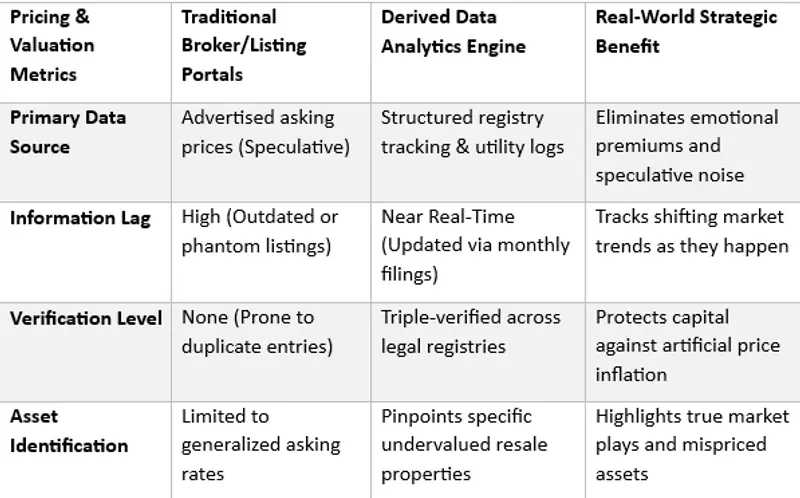
Analytical Framework: Traditional Listings vs. Derived Data Models
To guide acquisition teams, the table below compares standard retail search methods with institutional derived data analytics.
Identifying Mispriced Value Opportunities in Secondary Sectors
Using derived data models allows investors to spot structural pricing anomalies where high-quality assets are valued below their true long-term market potential.
A. Spotting Motivated Resale Capital
By analyzing historical holding periods alongside corporate debt filings, buyers can identify specific distress points within premium micro-markets. This visibility creates opportunities to acquire institutional-grade assets at highly competitive entry prices.
B. Projecting Value Spikes Ahead of Infrastructure Completion
Tracking local infrastructure milestones allows investors to position capital ahead of major property value Spikes. This strategy ensures investments are placed in high-growth corridors before the broader retail market catches on to the opportunity.
Frequently Asked Questions (FAQ)
Q1: Why are public listing portals often unreliable for Gurgaon resale property valuation?
Public listing portals frequently suffer from duplicate entries, outdated information, and inflated asking prices that include speculative broker markups. They reflect initial seller expectations rather than actual, verified transaction prices.
Q2: How do investors access official registry tracking data in Haryana?
Investors can access historical registration records through the Haryana government's official Jamabandi and e-Registration portals. Institutional buyers often use automated scrapers and data systems to organize this raw text into structured valuation models.
Q3: What is a clear sign of an undervalued property investment opportunity in Gurgaon?
A clear indicator is an asset trading at a significant discount compared to recently registered transactions in the same micro-market, particularly when utility logs show high local occupancy and steady rental demand.
Q4: How do changes in utility usage patterns help signal real estate trends?
Steady growth in active electricity connections and local maintenance fees shows a community is transitioning from a speculative investment area into a stable, owner-occupied neighborhood. This shift supports long-term rental yields and steady capital appreciation.
Q5: Does HRERA actively regulate resale transactions within the secondary market?
HRERA primarily focuses on the primary market, ensuring developers deliver on project timelines and manage escrow accounts properly. While brokers in the secondary market must hold valid RERA licenses, individual resale transactions are handled through standard civil contracts and local property registries.
Q6: Can derived data models protect buyers from structural title defects?
Derived data engines are excellent for uncovering commercial trends and pricing anomalies, but they do not replace traditional legal due diligence. Every transaction still requires a thorough title search across public archives to ensure the property is clear of any legal encumbrances.