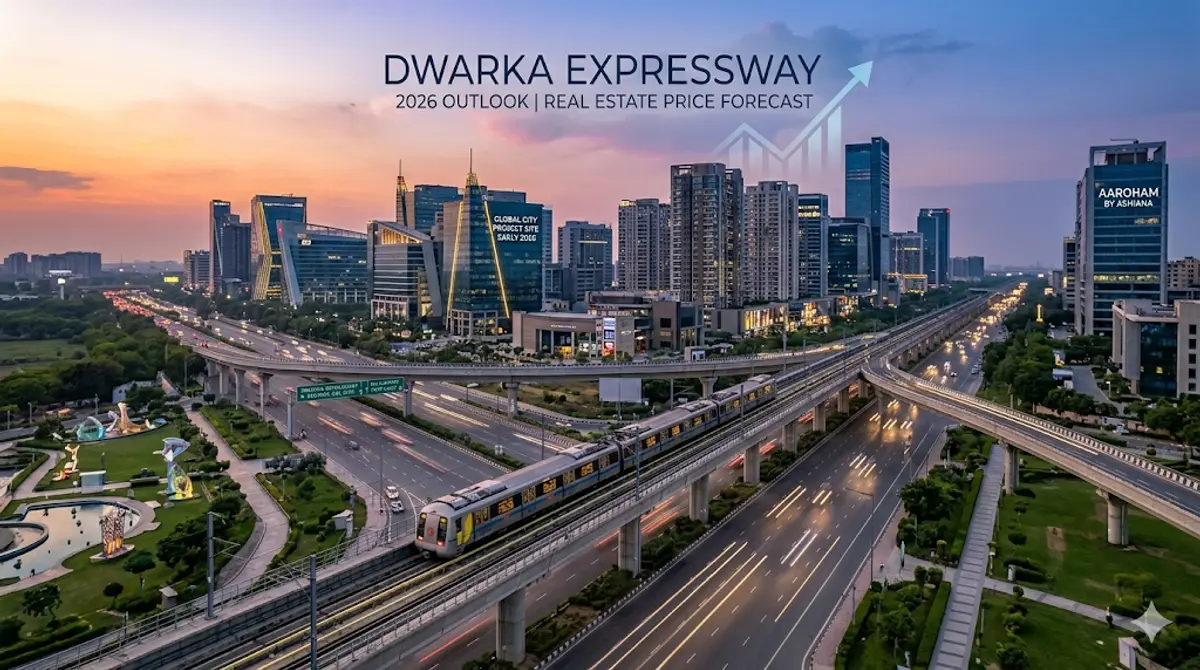
Dwarka Expressway 2026 Outlook | Real Estate Price Forecast
Dwarka Expressway 2026 Outlook | Real Estate Price Forecast
Dwarka Expressway in 2026 — The Big Picture
The Dwarka Expressway has already transformed from an aspirational project to a functional reality. By 2026, with metro connectivity progressing, social infrastructure maturing, and several large societies fully occupied, this corridor is expected to emerge as one of NCR's most sought-after residential destinations.
Property prices along the expressway have already risen sharply — by 40–70% in some sectors since 2020. The question for 2026 and beyond is: how much upside remains, and which sectors represent the best value today?
Metro Timeline and Its Impact
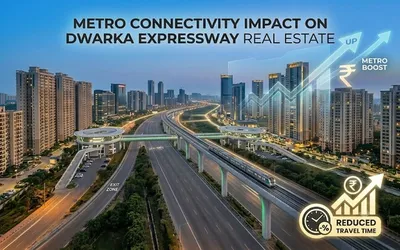
The proposed metro extension connecting Dwarka Sector 21 to Cyber City via the Dwarka Expressway corridor is among the most anticipated infrastructure developments in the NCR. When commissioned, this line will fundamentally change the commute equation, making Dwarka Expressway sectors practical for daily commuters to both Delhi and Gurgaon's corporate hubs.
Historically, NCR property markets see a 15–25% price spike in the 12–18 months preceding metro commissioning. Investors who enter before this window typically capture the best returns.
Price Forecasts by Sector
Sector 103–106 (mid-corridor): Currently at ₹8,000–₹11,000 per sqft. Expected to reach ₹12,000–₹14,000 by 2026 based on infrastructure progression and delivered supply. Sector 109–110A (premium zone): Currently ₹10,000–₹14,000 per sqft. Upside to ₹15,000–₹18,000 by 2026 if metro line is confirmed. Sectors 99–102 (affordable belt): ₹5,500–₹7,500 per sqft currently. Good value zone with 20–30% upside potential.
Social Infrastructure Maturation
Several large-format schools, including Ryan International and DPS branches, have opened or are opening near Dwarka Expressway sectors. Medanta's hospital in the area, alongside malls and multiplexes under development, is rapidly filling the social infrastructure gaps that were a concern for early residents.
This maturation of social amenities is expected to accelerate end-user demand significantly, transitioning the corridor from an investor-dominated market to a more balanced owner-occupier market — a healthy sign for long-term price stability.
Best Sectors to Invest in Now
Sectors 104 and 105 offer a sweet spot — not as expensive as the premium zones but with excellent infrastructure in place and strong upcoming demand. Sector 109 for premium buyers remains a compelling bet given its proximity to the proposed metro station.
For budget investors, sectors 99–101 with resale apartments from delivered projects offer the best risk-reward ratio for a 3–5 year investment horizon.
Conclusion
The Dwarka Expressway in 2026 will look substantially different from today — more connected, more livable, and more expensive. Investors who act in 2025 are likely buying before the next wave of price appreciation driven by metro connectivity. The window for pre-metro returns is narrowing — act with diligence but without delay.