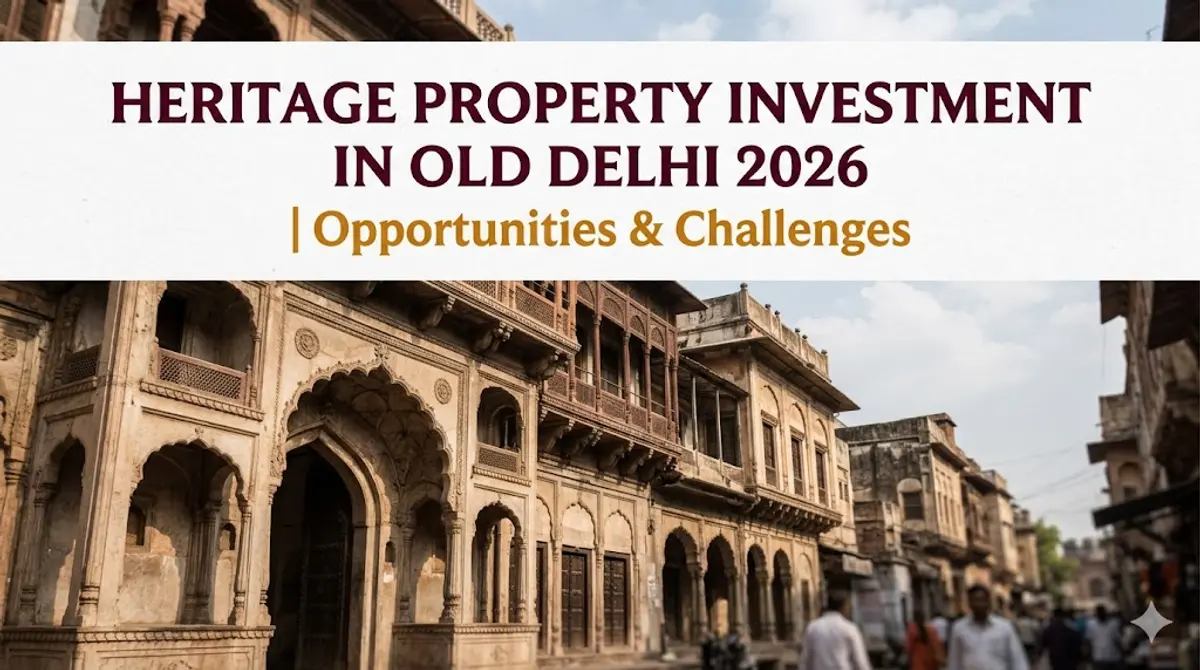
Heritage Property Investment in Old Delhi 2026 | Opportunities & Challenges
Heritage Property Investment in Old Delhi 2026 | Opportunities & Challenges
Old Delhi — A Unique and Often Misunderstood Investment
Old Delhi (Shahjahanabad), built by Mughal Emperor Shah Jahan in the 17th century, is one of the world's most historically significant urban areas. Its havelis, traditional markets (Chandni Chowk, Khari Baoli), and dense residential lanes create a real estate market that operates by completely different rules from modern NCR property.
Investing in Old Delhi property is not for everyone — it requires patience, specialist legal knowledge, and sensitivity to heritage regulations. But for those who approach it correctly, it offers unique opportunities unavailable anywhere else in India.
The Haveli Conversion Opportunity
Havelis (traditional courtyard mansions) in Chandni Chowk, Ballimaran, and the lanes of Shahjahanabad can be purchased — often through complex multi-heir family transactions — at prices of ₹2–₹15 crore for properties with 2,000–10,000 sqft footprints.
Converted into boutique hotels, heritage homestays, or premium residences with traditional-modern design, these havelis command premium usage-based returns. Several successful haveli hotel conversions — Haveli Dharampura, Haveli Amir Khusro — demonstrate the model's viability.
Heritage Regulations — The Key Constraint
Properties within Old Delhi's heritage zones (Grade I and Grade II listed structures) face strict ASI (Archaeological Survey of India) and Delhi Urban Heritage Foundation regulations governing external modifications. Structural changes to heritage facades or listed elements require heritage authority approval — a complex process.
Interiors can be modernised with appropriate care, but exterior modifications are heavily regulated. Developers must work within the existing structural envelope — a constraint that both limits development flexibility and preserves authenticity.
Commercial Potential — Tourism and Hospitality
Old Delhi's Chandni Chowk area now attracts 60,000+ tourists daily — domestic and international — creating strong demand for quality accommodation, food experiences, and heritage hospitality. Haveli boutique hotels with authentic heritage presentation charge ₹8,000–₹25,000 per night — comparable to premium Delhi hotels — while offering experiences those hotels cannot replicate.
Food heritage businesses in Old Delhi's lanes generate extraordinary revenues from the tourism economy.
The Legal Complexity of Old Delhi Property
Multi-generational joint ownership is common in Old Delhi property — a haveli may have 15–30 legal heirs across multiple generations. Assembling clear title requires patience and specialist legal support.
Property records in Shahjahanabad are maintained across multiple authorities (MCD, Revenue Department, ASI for heritage-listed structures). A specialist old Delhi property lawyer is non-negotiable.
Conclusion
Heritage property investment in Old Delhi is a niche, specialist strategy — not mainstream real estate investment. For buyers with patient capital, specialist legal support, and creative vision for heritage-to-hospitality conversion, it offers opportunities for both authentic preservation and exceptional commercial returns unavailable anywhere else in India.
Frequently Asked Questions (FAQs)
Q: Can foreigners or NRIs buy property in Old Delhi?
A: Yes — FEMA permits NRIs and OCIs to purchase residential and commercial property in Old Delhi. Heritage-listed property purchases may require additional clearances depending on the property's listing status.
Q: What is the price of a haveli in Chandni Chowk or Old Delhi?
A: Havelis range from ₹2 crore (small, partial ownership, in poor condition) to ₹15 crore+ for larger, structurally sound properties with clear title. Price varies enormously based on size, condition, title clarity, and lane location.
Q: Can I convert a haveli into a boutique hotel in Old Delhi?
A: Yes — subject to MCD commercial use permissions and ASI/heritage authority approval for any structural modifications. Interior renovation for hospitality use is generally more straightforward than exterior modifications.
Q: Is Old Delhi property a good long-term investment?
A: For heritage tourism economy exposure — yes. Old Delhi's tourism momentum and scarce authentic heritage supply create a compelling long-term hospitality investment thesis. For standard residential investment, the legal complexity and heritage restrictions make other Delhi zones more practical.