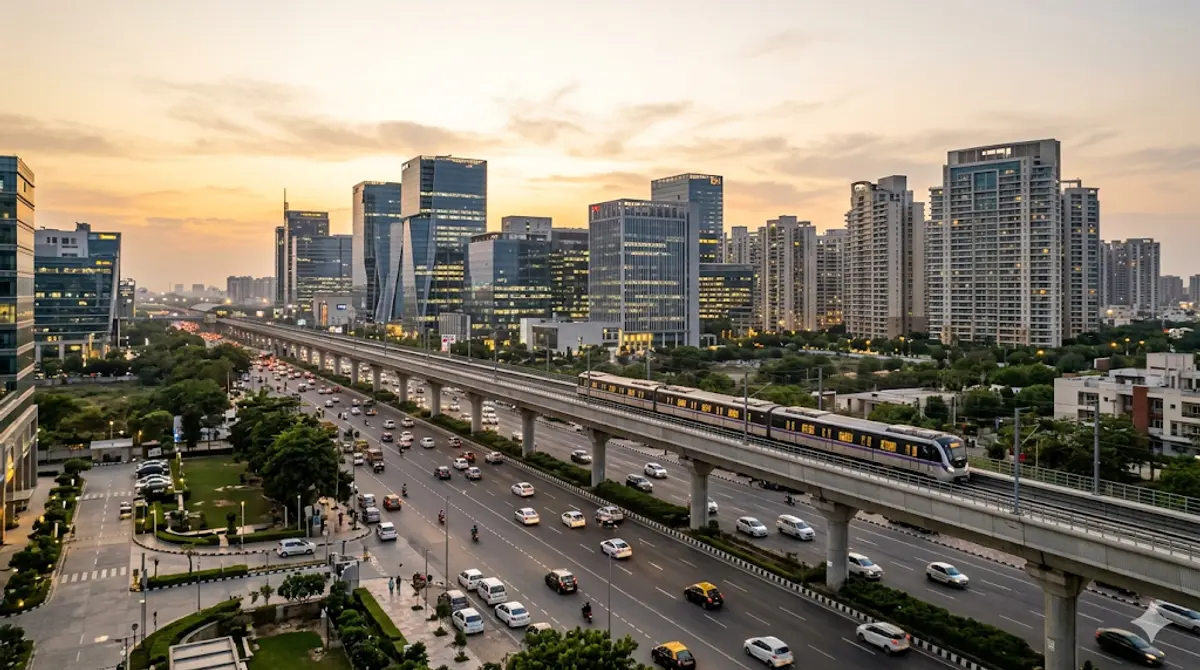
Infrastructure Impact on Real Estate Gurgaon 2026 | Explained
Infrastructure Impact on Real Estate Gurgaon 2026 | Explained
Infrastructure: The Invisible Architect of Property Values
Real estate is fundamentally a location-based asset, and nothing changes the value of a location more dramatically than infrastructure. In Gurgaon, the story of infrastructure investment over the past two decades is also the story of extraordinary real estate appreciation.
From the Millennium City Centre's development in the early 2000s to the Dwarka Expressway completion in 2019, each major infrastructure project has unlocked billions of rupees in real estate value for investors in the surrounding sectors.
Expressways and Their Property Price Impact
The NH-48 (Delhi-Jaipur Expressway) was the original trigger for Gurgaon's real estate boom. DLF's foresight in acquiring land along this corridor created the foundation of modern Gurgaon. The Dwarka Expressway, once operational, triggered a fresh wave of development in sectors 99–115.
The KMP (Kundli-Manesar-Palwal) Expressway has been a game-changer for the western belt of Gurgaon, connecting it to Manesar's industrial base and improving freight movement. Properties along KMP-adjacent sectors have appreciated 30–50% since its commissioning.
Metro Corridors — Sustained Value Appreciation
Studies across Indian cities consistently show that properties within 500m of metro stations appreciate 15–30% faster than the broader market. In Gurgaon, the Yellow Line metro's arrival transformed the MG Road belt into one of the city's most premium real estate zones.
The Rapid Metro further boosted Golf Course Road values. As upcoming metro extensions are commissioned, new beneficiary zones will emerge — particularly along the Dwarka Expressway and Sohna Road.
Civic Infrastructure — The Underrated Driver
While expressways and metros get headlines, civic infrastructure like sewage networks, water supply systems, and road widening projects also significantly impact property values.
Areas in Gurgaon that received upgraded civic infrastructure — such as DLF Phase I, II, III — consistently command price premiums over areas with ongoing civic issues. MCG's (Municipal Corporation of Gurgaon) infrastructure projects are worth tracking as they often precede real estate value increases.
Schools, Hospitals, and Social Infrastructure
The presence of quality schools (Shri Ram School, GD Goenka, DPS), super-specialty hospitals (Fortis, Medanta, Max), and premium retail (Ambience Mall, DLF Mall of India) creates the social infrastructure layer that makes residential areas truly livable.
Buyers consistently pay premiums for proximity to top-rated schools. A flat within 2 km of a reputed school in Gurgaon commands a 5–15% price premium over comparable units further away.
Reading Infrastructure for Investment Decisions
Smart investors track Haryana government's infrastructure announcements, NHAI project updates, and DMRC metro expansion plans to identify future price appreciation zones early.
The window between infrastructure announcement and commissioning — often 3–7 years — is the sweet spot for real estate investment. Prices rise on announcement, appreciate moderately during construction, and then spike at completion.
Conclusion
Understanding infrastructure's role in Gurgaon's real estate market is essential for any serious investor. The city's ongoing infrastructure investment pipeline ensures continued property value growth in emerging sectors, making this one of India's most dynamic real estate markets for the next decade.