Kalkaji Delhi Property 2026 | Metro Connectivity and South Delhi Value
Kalkaji Delhi Property 2026 | Metro Connectivity and South Delhi Value
Kalkaji — South Delhi Living at Value Prices
Kalkaji is one of south Delhi's more accessible residential addresses — it offers the prestige of a south Delhi postcode, decent infrastructure, and the rare advantage of two metro lines serving the area, making it significantly more affordable than its more celebrated south Delhi neighbours like GK or Saket.
The locality is named after the famous Kalkaji Mandir — one of Delhi's most significant religious sites — and has a diverse resident base spanning government employees, private sector professionals, and established Delhi families.
Dual Metro Advantage
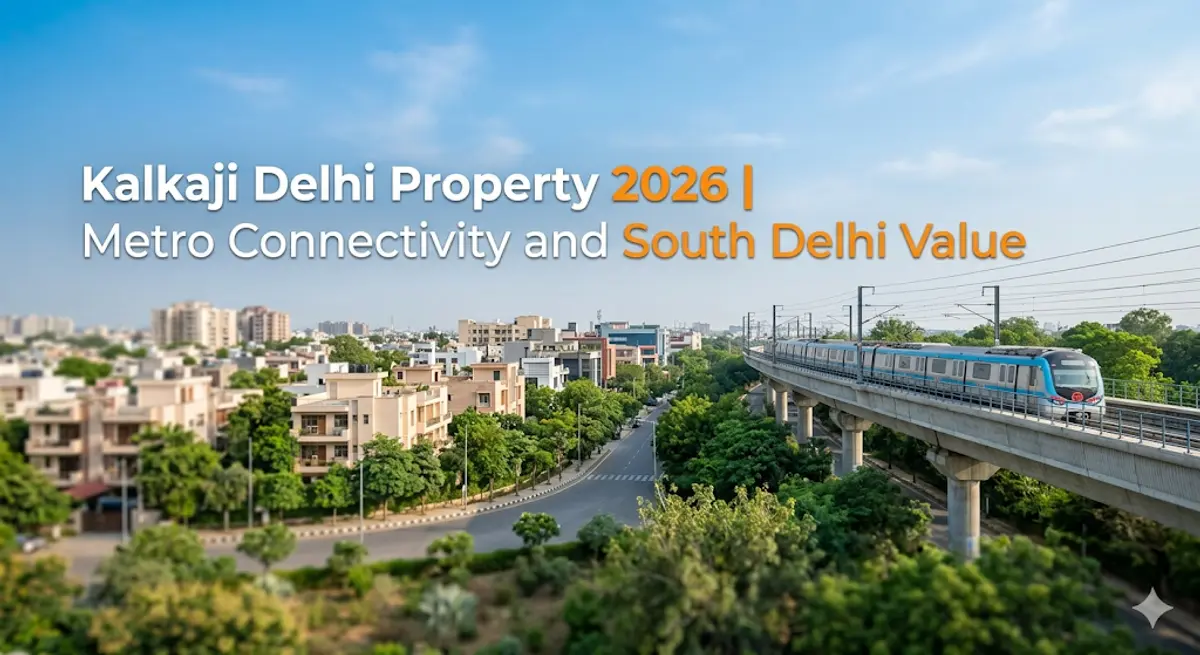
Kalkaji benefits from both the Violet Line (Inderlok–Escorts Mujesar) and the Pink Line (Majlis Park–Shiv Vihar), with Kalkaji Mandir station serving as an interchange between the two. This dual metro access — rare in Delhi — provides connectivity to virtually every part of Delhi without a single transfer.
This transit advantage is increasingly being priced into Kalkaji real estate, with properties within 500m of the metro interchange commanding 12–18% premiums over comparable non-metro properties in the same locality.
Property Prices and Investment
Builder floors in Kalkaji range from ₹90 lakhs to ₹2.5 crore depending on the block, floor, and renovation quality. Ground-floor units near the main market are popular for commercial-residential mixed use by small business owners.
Gross rental yields of 3–4% are slightly better than nearby GK or Defence Colony, reflecting more competitive entry prices against comparable rental income. The locality is particularly popular with south Delhi buyers whose budget falls short of GK or Saket.
Social Infrastructure
Kalkaji's social infrastructure is well-developed — Apollo Spectra, Fortis, and multiple quality clinics are within 5 km. Quality schools including DAV, DPS (multiple branches nearby), and Nirmal Bhartia School serve the local educational needs. The Nehru Place commercial district — one of Delhi's largest electronics and IT markets — is immediately adjacent, creating employment catchment for the locality's rental market.
Conclusion
Kalkaji's dual metro advantage, south Delhi address, and more competitive pricing compared to Saket or GK make it an intelligent choice for buyers seeking value within south Delhi's residential landscape. For investors, the combination of metro premium and improving social infrastructure creates a compelling appreciation thesis.
Frequently Asked Questions (FAQs)
Q: Is Kalkaji a safe area to live in Delhi?
A: Yes — Kalkaji is considered one of the safer south Delhi localities, with active community life, good street lighting, and proximity to institutional Delhi that contributes to a law-abiding neighbourhood character.
Q: How far is Kalkaji from Saket mall and south Delhi malls?
A: Select Citywalk in Saket is approximately 4–5 km from Kalkaji and easily accessible via Pink Line metro (no transfer needed). DLF Mall of India in Noida is also accessible via Violet Line.
Q: What types of properties are available in Kalkaji?
A: Predominantly builder floors (2BHK and 3BHK) and a small number of independent houses. There are also some older DDA apartments and a few society-type projects in the outer periphery.
Q: Is Kalkaji good for rental income investment?
A: Yes — the dual metro advantage keeps vacancy rates low and generates demand from a diverse tenant profile. Gross yields of 3–4% are competitive for south Delhi.