Why Institutional Investors Are Bullish on Dwarka Expressway
Why Institutional Investors Are Bullish on Dwarka Expressway
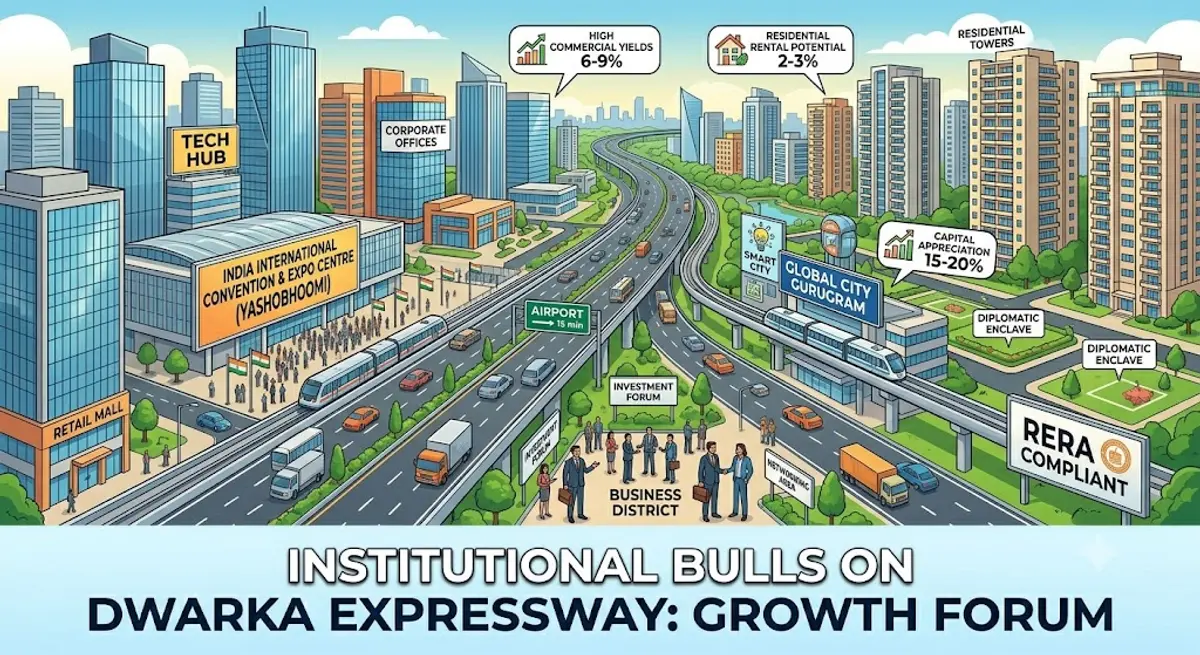
Dwarka Expressway has rapidly transformed from a developing infrastructure corridor into one of the most promising real estate destinations in the National Capital Region (NCR). While retail buyers continue to invest in residential properties, institutional investors—including real estate funds, private equity firms, and large developers—have also shown growing confidence in the region.
Their interest is driven by a combination of infrastructure upgrades, long-term growth prospects, increasing demand, and the availability of large-scale development opportunities. Understanding why institutional investors are bullish on Dwarka Expressway can provide valuable insights for individual investors looking to make informed decisions.
Strategic Location Advantage
One of the strongest reasons behind institutional interest is the location of Dwarka Expressway. The corridor connects Delhi with Gurugram while providing smooth access to the Indira Gandhi International Airport and major business districts.
This strategic positioning makes it attractive for residential, commercial, and mixed-use developments. Large investors often prioritize locations with excellent connectivity because they support long-term demand and sustainable value creation.
Massive Infrastructure Development
Infrastructure has been the biggest growth catalyst for Dwarka Expressway. The completion of major road networks, service lanes, flyovers, and planned metro connectivity has significantly improved accessibility.
Institutional investors typically look for areas where government-backed infrastructure investments create long-term economic activity. Improved transportation networks not only enhance the quality of life but also increase the attractiveness of nearby real estate projects.
Growing Residential Demand
The corridor has witnessed consistent demand from homebuyers seeking modern housing with better connectivity.
Premium residential projects, integrated townships, and luxury developments have attracted professionals, business owners, and families relocating from different parts of Delhi-NCR. This strong end-user demand provides confidence to institutional investors who prefer markets with sustainable absorption rather than speculative buying.
Expansion of Commercial Activity
Commercial development is another factor encouraging institutional participation.
As office spaces, retail centers, hotels, and mixed-use projects emerge along Dwarka Expressway, employment opportunities are expected to increase. A growing workforce creates demand for nearby housing, strengthening both the residential and commercial real estate markets.
Institutional investors often view this combination as a positive indicator of long-term growth.
Presence of Reputed Developers
Leading real estate developers have launched several large-scale projects along the expressway. Their participation increases market credibility and encourages additional institutional capital.
Projects developed by established brands generally attract better financing, higher buyer confidence, and improved sales performance. This reduces investment risk and makes the corridor more attractive to professional investors.
Potential for Long-Term Capital Appreciation
Institutional investors usually focus on long investment horizons rather than short-term market movements.
Dwarka Expressway offers the possibility of steady capital appreciation driven by infrastructure improvements, population growth, and expanding commercial ecosystems. As more projects become operational and surrounding areas mature, property values may continue to strengthen over time.
This aligns well with the investment strategy of large funds seeking stable returns.
Strong Rental Market Prospects
The rise in employment hubs and improved connectivity is also supporting rental demand.
Professionals working in Gurugram’s corporate districts increasingly seek housing options with convenient commuting. Modern residential projects along Dwarka Expressway are well positioned to benefit from this trend.
For institutional investors holding rental assets, steady occupancy and recurring income add another layer of investment appeal.
Government Policies and Urban Development
Government initiatives promoting infrastructure development and planned urban expansion have further boosted confidence in the corridor.
Institutional investors generally prefer markets where policy support, regulatory improvements, and public investment contribute to long-term economic growth. Dwarka Expressway has benefited from several such initiatives, reinforcing its investment potential.
What Individual Investors Can Learn
The growing participation of institutional investors sends a positive signal but should not be the sole reason to invest.
Individual buyers should carefully evaluate project quality, developer reputation, legal approvals, pricing, and future infrastructure before making decisions. Choosing properties with strong fundamentals and adopting a long-term investment approach can help maximize returns.
Conclusion
Institutional investors are bullish on Dwarka Expressway because of its strategic location, expanding infrastructure, rising residential demand, commercial growth, and long-term appreciation potential. These factors create a compelling investment environment that appeals to both large financial institutions and retail buyers.
While every investment carries risks, the corridor’s ongoing transformation and strong development pipeline position it as one of the most promising real estate markets in the Delhi-NCR region. Investors who focus on quality assets and maintain a long-term perspective may benefit from the area's continued evolution.
Frequently Asked Questions (FAQs)
1. Why are institutional investors interested in Dwarka Expressway?
They are attracted by strong infrastructure development, strategic connectivity, growing demand, and long-term appreciation potential.
2. Does institutional investment indicate future property growth?
Institutional participation can reflect confidence in a market’s prospects, but future growth also depends on economic conditions, infrastructure, and demand.
3. Is Dwarka Expressway suitable for long-term real estate investment?
Many experts consider it a promising long-term investment destination due to ongoing urban development and improving connectivity.
4. Should retail investors follow institutional investment trends?
Institutional activity can be a useful indicator, but retail investors should still conduct independent research and evaluate projects based on location, builder credibility, and investment goals.