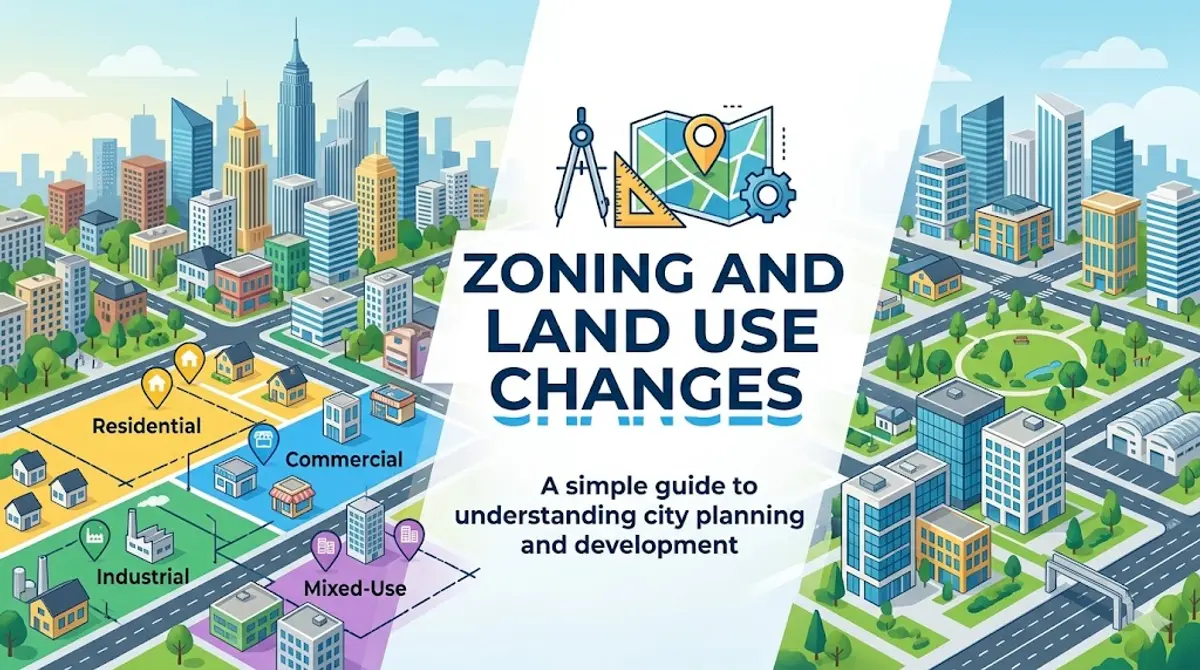
Zoning and Land Use Changes
Zoning and Land Use Changes
Zoning and Land Use Changes in India: What Property Buyers Must Know
Zoning and land use changes are among the most critical yet overlooked factors in real estate decision-making. In India, as cities expand rapidly and urban development plans are frequently revised, understanding how land is classified and how those classifications change can make a significant difference in the value and usability of a property.
Whether you are a homebuyer, investor, or developer, zoning laws directly affect what can be built on a piece of land, how it can be used, and how it may appreciate over time. A residential plot reclassified as commercial or mixed-use can see a dramatic increase in value, while an agricultural parcel converted to industrial use can unlock entirely new opportunities. Conversely, improper understanding of zoning restrictions can lead to legal complications and financial loss.
This guide breaks down what zoning means in the Indian context, how land use changes occur, and what these shifts mean for property buyers and investors today.
What Is Zoning and Land Use?
Zoning refers to the legal classification of land into categories that determine how it can be used. These classifications are set by local municipal authorities or development authorities and are reflected in the Master Plan or Development Plan of a city.
- Types of Zones
Residential: For housing and related uses
Commercial: For shops, offices, and business establishments
Industrial: For manufacturing and warehousing
Agricultural: For farming and related activities
Recreational / Green: For parks, open spaces, and heritage zones
- Purpose of Zoning
Zoning exists to ensure orderly urban development. It prevents incompatible land uses from coexisting in the same area, such as factories next to homes or polluting industries near water bodies. It also guides infrastructure planning by concentrating similar uses in specific zones, making it easier to provide utilities, roads, and services efficiently.
How Land Use Changes Happen in India
Land use changes in India can occur through several mechanisms, both formal and informal. Understanding these pathways is essential for investors and buyers.
- Master Plan Revisions
City Master Plans are periodically revised, typically every 10 to 20 years. During these revisions, large tracts of land can be reclassified from agricultural to residential or from residential to commercial. Cities such as Hyderabad, Pune, and Bengaluru have seen significant land use reclassifications in recent Master Plan updates, opening up new development corridors.
- Government Notifications and Policy Changes
State governments can issue specific notifications that alter land use designations in response to infrastructure projects, economic zones, or urban growth pressures. The development of metro corridors, highways, and industrial parks often triggers zone changes in surrounding areas.
- Developer-Initiated Conversions
In some cases, developers approach planning authorities to seek zone change approvals for specific parcels, paying conversion charges in exchange for permission to develop land beyond its classified use. This process, regulated under state-level town planning acts, is common in fast-growing cities on the urban periphery.
Impact of Zoning Changes on Property Value
Few factors affect property values as dramatically as zoning changes. The reclassification of land can unlock or restrict development potential, directly influencing how much a property is worth.
- Upward Value Movement
When agricultural or low-density residential land is reclassified for higher-density residential, commercial, or mixed-use purposes, property values can increase substantially. Investors who acquire land ahead of such reclassifications, or in areas where reclassification is anticipated, often see exceptional returns.
- Downward or Restrictive Effects
Conversely, if land previously available for development is reclassified as green belt, heritage zone, or flood plain, its buildable potential diminishes. Properties near industrial zones may also see reduced residential demand if land use shifts introduce noise, pollution, or heavy vehicle traffic.
- Mixed-Use Zoning as a Growth Driver
Cities increasingly encourage mixed-use zoning, where residential, commercial, and recreational uses coexist in the same area. This approach raises property values by creating vibrant, walkable neighbourhoods. Developments in cities like Mumbai's Bandra-Kurla Complex and Gurugram's Golf Course Road have benefited from mixed-use zoning frameworks.
Key Benefits of Understanding Zoning Laws
Buyers and investors who understand zoning laws gain a significant advantage in making informed property decisions.
- Informed Investment Decisions
Knowing the current zone and potential for reclassification allows investors to identify undervalued properties with high appreciation potential. Agricultural land on the urban fringe, for example, may be years away from residential conversion but can offer significant long-term gains.
- Legal Risk Avoidance
Purchasing property without verifying zoning compliance can lead to costly legal disputes or the inability to develop as planned. Due diligence on zoning status is a fundamental step in any property transaction in India.
- Development Planning Clarity
For developers and commercial buyers, understanding the Floor Area Ratio (FAR), setback requirements, and permissible uses within a zone ensures that development plans align with regulatory requirements from the outset, avoiding delays and penalties.
Challenges and Risks of Land Use Changes
While land use changes present opportunities, they also carry risks that buyers and investors must carefully evaluate.
- Regulatory Uncertainty
Land use policies in India are subject to frequent revision and political influence. A zone change anticipated by a developer or investor may not materialise, leaving assets locked in lower-value classifications for years.
- Conversion Charges and Compliance Costs
Obtaining approvals for zone changes involves paying conversion charges, development fees, and stamp duties, which can significantly increase the effective cost of a project. These costs vary widely by state and municipality.
- Litigation Risks
Zone changes are frequently challenged in courts by resident welfare associations, environmental groups, and competing landowners. Ongoing litigation can delay development timelines and reduce investor confidence.
- Encroachment and Unauthorised Construction
In many Indian cities, unauthorised construction on land with misrepresented or unclear zoning is common. Buyers who do not verify zoning status independently risk purchasing properties that cannot be regularised and may be subject to demolition orders.
Case Study 1 – Successful Zone Reclassification
Hyderabad's Outer Ring Road (ORR) corridor is a strong example of how planned land use changes can create substantial real estate value. As the ORR was developed and surrounding areas were reclassified from agricultural and low-density use to residential and commercial zones under HMDA's revised Master Plan, land prices along the corridor increased dramatically.
Investors who identified the corridor early and acquired agricultural parcels or low-value plots ahead of the reclassification cycle saw returns that significantly outpaced conventional investments. Today, areas like Shamshabad, Tukkuguda, and Mokila—once farmland—host large residential townships, IT campuses, and logistics hubs, all enabled by proactive land use changes aligned with infrastructure investment.
Case Study 2 – Delayed or Reversed Zoning
In contrast, several peripheral areas around major metros have seen proposed residential zone changes stalled due to environmental concerns, court orders, or government policy reversals. In parts of the National Capital Region, land earmarked in development plans for residential development was later restricted following orders related to floodplain protection and groundwater conservation.
Investors who had purchased land based on anticipated rezoning found their assets locked in agricultural classification indefinitely. This underscores the importance of not relying solely on proposed or anticipated zone changes when making investment decisions. Verified, notified, and implemented changes carry far less risk than speculative bets on future reclassifications.
Zoned vs Unzoned Land: What Buyers Should Know
India's urban peripheries often contain land that falls outside formal zoning frameworks or is in transition between classifications. Understanding the difference between properly zoned and unzoned land is critical.
- Properly Zoned Land
Land with a confirmed zone classification in the current Master Plan provides legal clarity on permissible uses, buildable area, and development timelines. It carries lower regulatory risk and is easier to finance, insure, and sell.
- Unzoned or Transitional Land
Land in panchayat limits, gram panchayat areas, or outside municipal jurisdiction may lack formal zoning. While this can offer lower entry prices, it carries significant risk of future regulatory action, difficulty in obtaining construction approvals, and limited resale liquidity.
- Investment Potential
The highest appreciation potential often lies in land on the boundary of urban expansion—areas that are unzoned today but likely to be incorporated into city limits and reclassified in the next planning cycle. However, this requires long investment horizons and a high tolerance for regulatory risk.
Should You Factor Zoning Into Your Property Decision?
Absolutely. Zoning is not just a technical or regulatory consideration—it is a fundamental driver of property value and development feasibility.
- For End-Users and Homebuyers
Verify that the property you intend to buy is in a residential zone and that all construction approvals are consistent with the zone. Ensure there are no pending zone change applications or notifications that could alter the character of the neighbourhood.
- For Long-Term Investors
Study Master Plans and identify corridors where zone changes are likely due to infrastructure development. Land or plotted development in these areas offers strong appreciation potential over 5 to 10-year horizons.
- For Short-Term Investors
Speculating on zone changes is risky for short-term capital deployment. Timelines for reclassification are unpredictable, and carrying costs on low-yield land can erode returns. Short-term investors are better served by already-developed properties in established zones.
Future of Zoning and Land Use in India
India's rapid urbanisation, infrastructure investment, and housing demand will continue to drive significant land use changes in the years ahead. The government's focus on transit-oriented development, industrial corridors, and smart city zones will reshape zoning frameworks across major metros and Tier-2 cities.
Digital land records, GIS-based Master Plans, and online zoning portals are improving transparency and accessibility of zoning information. Buyers and investors increasingly have access to the data they need to make informed decisions.
However, the gap between planned and implemented zoning changes remains wide in many parts of India. Success in zoning-linked real estate investment will depend on verified information, patience, and a clear understanding of local governance and planning processes. For those willing to do the due diligence, zoning changes will remain one of the most powerful levers of real estate value creation in India.
FAQ SECTION
1. What are zoning and land use changes in India?
Zoning laws classify land into categories such as residential, commercial, or agricultural. Land use changes occur when authorities reclassify land from one category to another, affecting what can be built or operated on it.
2. How do zoning changes affect property value?
Reclassification to higher-value zones such as commercial or mixed-use typically increases property values significantly. Restrictions such as green belt or floodplain designations can reduce development potential and value.
3. How can I verify the zoning of a property in India?
You can check the city’s Master Plan on the website of the development authority, such as BBMP, HMDA, or CMDA. You may also obtain a land use certificate from the local planning office.
4. Can agricultural land be converted to residential use?
Yes, but it requires approval from the state revenue department and local planning authority. Conversion charges must be paid, and the change must be consistent with the prevailing Master Plan or its revision.
5. Is investing in land pending zone reclassification a good idea?
It can offer strong long-term returns but carries significant risk. Reclassification timelines are uncertain, and not all proposed changes are implemented. It is most suitable for investors with a long horizon and risk tolerance.
6. Are mixed-use zones better for real estate investment?
Mixed-use zones often generate higher demand and values due to the variety of permissible uses. They are particularly attractive in urban corridors with strong commercial and residential demand.